Anima Leadership believes in a compassionate approach to racial justice: that means making issues of equity, diversity, and inclusion more accessible and understandable to everyone. Join us on the Anima Blog as we journey with you from diversity basics to advanced belonging framed around pop culture, current events, and more.

Anti-Black Racism in the C-Suite

January 26, 2023

Anima Leadership’s compassionate approach to racial justice means making issues of equity, diversity, and inclusion more accessible and understandable to everyone. Join us on the Anima Blog as we journey with you from diversity basics to advanced belonging framed around popular culture, current events, and more.

When Black Excellence isn’t enough

It can be a long way to the top, especially for those from racialized backgrounds. When even the highest achievers come face-to-face with systemic barriers, organizations need to take action to create more equitable workplaces and allow racialized employees well-deserved positions in executive offices.

For fans of the Toronto Raptors (and the NBA in general), Raptors president Masai Ujiri is a living testament to the ongoing challenges of racial discrimination in the workplace. Even after  reaching the mountaintop of NBA glory—leading the Toronto Raptors to win the NBA Championship in 2019—Masai’s undeniable excellence wasn’t enough for some.

You might remember the night of June 13, 2019, where the Raptors had just won their first title in Oakland and Ujiri made his way to the court to join his celebrating team. He was stopped by a sheriff’s deputy on the edge of the court who refused to recognize his VIP pass and instead instigated a shoving courtside match, later suing Ujiri for the incident. When the lawsuit was dropped in 2021, Ujiri released a statement identifying the moment for what it was: an incident of anti-Black racist on the biggest stage in basketball.

Masai Ujiri raises his fists in celebration of the NBA Championship win, surrounded by members of the Toronto Raptors team.
Masai Ujiri celebrates winning the 2019 NBA Championships.

Reputation doesn’t always equal respect

Anti-Black racism can manifest in a multitude of ways, and affects every person of African descent, whether born on the continent or as part of its wide diaspora. For Masai, that meant a long and arduous journey from basketball journeyman to unpaid and then underpaid work as a scout and General Manager, to his eventual role of president of the Toronto Raptors, having to constantly prove his value every step of the way.

Masai’s keen eye for talent and opportunity is one of his hallmarks—being the lead on a blockbuster trade for eventual NBA Finals MVP Kawhi Leonard will give you that reputation. But for Black professionals, reputation and respect are not coupled together as often as they should be.

This meant contract negotiations that were so heated that the best president in Raptors history almost walked away from the franchise. Ujiri’s contract negotiations were in their final stages with the Toronto Raptors in the summer of 2021. Accusations that Masai “wasn’t worth the money” by one of the Raptors (white) board members almost derailed the negotiations, making Masai consider declining the offer outright to take a year sabbatical.

Anti-Black racism off the court

As we discuss in Anima’s Interrupting Racism course Challenging Anti-Black Racism in Organizations, negative stereotypes about Black people are so pervasive and accepted that even the most successful executive in Raptors history—one that oversaw a quadrupling of the franchise’s valuation from $500 million in 2014 to over $2 billion in 2022, and delivered its first and only championship— was not wholly considered a lynchpin to its continued business and sporting success. In a business where he’s received numerous accolades and awards for his brilliance, where fans of other teams are hoping to lure Masai Ujiri away, his own employers doubted his competency.

This isn’t isolated. A 2021 review of the United States’ 50 most valuable public companies by the Washington Post revealed Black employees represent a “strikingly small fraction of top executives”: only 8%. For the 2021 Fortune 500 companies, only four (less than 1%) of those CEOs are Black. And on the current trajectory it will take an estimated 95 years for Black employees to reach talent parity across the private sector—excellent or not.

What can we do?

If you are reading this and you are of African descent or a racialized person, parts of this probably sound eerily familiar. That’s a great disappointment for me to write, and maybe even for others to recognize. This work to disrupt discrimination never stops. Ujiri’s story is proof that even success doesn’t buffer individuals from discrimination; we need understanding, education, policies, support and accountability as some of the few powerful tools available to navigate this landscape. But the road ahead is long and vanishing.

Masai Ujiri speaks to the media with the Toronto Raptors.
Masai Ujiri speaking to media for the Toronto Raptors.

Masai Ujiri was able to seize the opportunities afforded to him, even if it meant sacrificing during the smaller battles along the way. And while we all make sacrifices, systemic discrimination asks some of us to make more sacrifices than other. Not all of us have the emotional latitude, financial means, or material support to make the same decisions that Ujiri made along the way. That’s why we all have the responsibility to change the conditions around us, so the sacrifices aren’t so great for those of us who follow.

It’s up to each and every one of us to keep pushing our organizations towards equity goals. For more on how you can challenge and change conditions of anti-Black racism in your own workplace, join our Challenging Anti-Black Racism in Organizations course.

Headshot for Husayn Symonds

Author: Husayn Symonds

Anti-Black Racism and Equity Educator

Husayn is an educator, leader and writer with over 10 years experience creating and developing ideas to advance cultural knowledge, policies, and environments within organizations across three continents. He enjoys creating opportunities for discovery and helping to broaden the vision of those he works with.

Learn more from Husayn in his Interrupting Racism course Challenging Anti-Black Racism in Organizations – A Primer.

Episode 11 — Fireside Chat with Clayton Thomas-Müller

April 27, 2023

Join Shakil Choudhury in conversation with Clayton Thomas-Müller, a best selling author, as they discuss his book “Life in the City of Dirty Water”, an account of Indigenous rights and environmental and economic justice. 

Apple PodcastsAnchorBreakerGoogle PodcastsPocketCastsRadio PublicSpotifyRSS

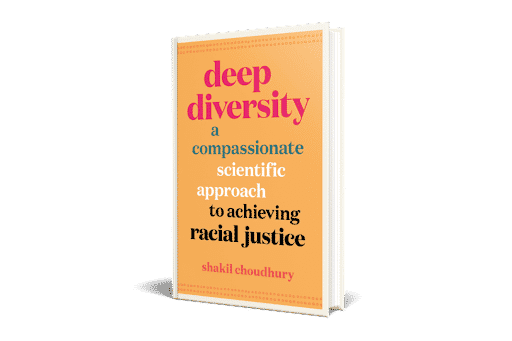
In his new book, Deep Diversity: A Compassionate, Scientific Approach to Achieving Racial Justice, Shakil Choudhury asks the question, “how do we make all people feel like they matter and belong?”

This session is part of a series of Fireside Chats, exploring this question and other themes from Deep Diversity with leaders in the justice, equity, diversity and inclusion field. Keep the conversation going by ordering your copy of Deep Diversity now!

Equity and inclusion is about justice, and from an Indigenous perspective, there can be no equity until justice is central to the conversation. As Clayton Thomas-Müller points out, “if Indigenous peoples had access to the land, water and resources, there would be no poverty and things would be very different in this country.” 

How do we help organizational leaders look at equity through a justice lens? How do we help them see their part in this ongoing work? How do we move beyond lip service, performative allyship and surface-level change to make lasting, systemic change?

To learn more about implementing Deep Diversity’s themes of equity and justice in your own organization, check out Anima Leadership’s Deep Diversity: Creating Inclusive Organizations course. Build your equity literacy and build a more just and inclusive workplace with expert training and support.

Episode 10 — Fireside Chat with Zarqa Nawaz

February 16, 2023
Apple PodcastsAnchorBreakerGoogle PodcastsPocketCastsRadio PublicSpotifyRSS

Join Shakil Choudhury in conversation with Zarqa Nawaz, author of the award-winning book, Laughing All the Way to the Mosque, and creator of the internationally acclaimed show Little Mosque on the Prairie, the world’s first sitcom featuring Muslim characters living in the West. Shakil and Zarqa will be talking about their new books, what it means to occupy a Muslim identity 20 years after 9/11, and they use stories to educate as well as entertain.

Storytelling to Challenge Racism and Islamophobia

The human brain comes hardwired to pay attention to stories—whether in the form of personal narrative, collective myths or gossip—and prioritize them over dry facts and figures.  So how can storytelling be used to challenge racism and Islamophobia? Why are counter-stories so important for nurturing equity and what lessons are relevant for organizational leaders? 

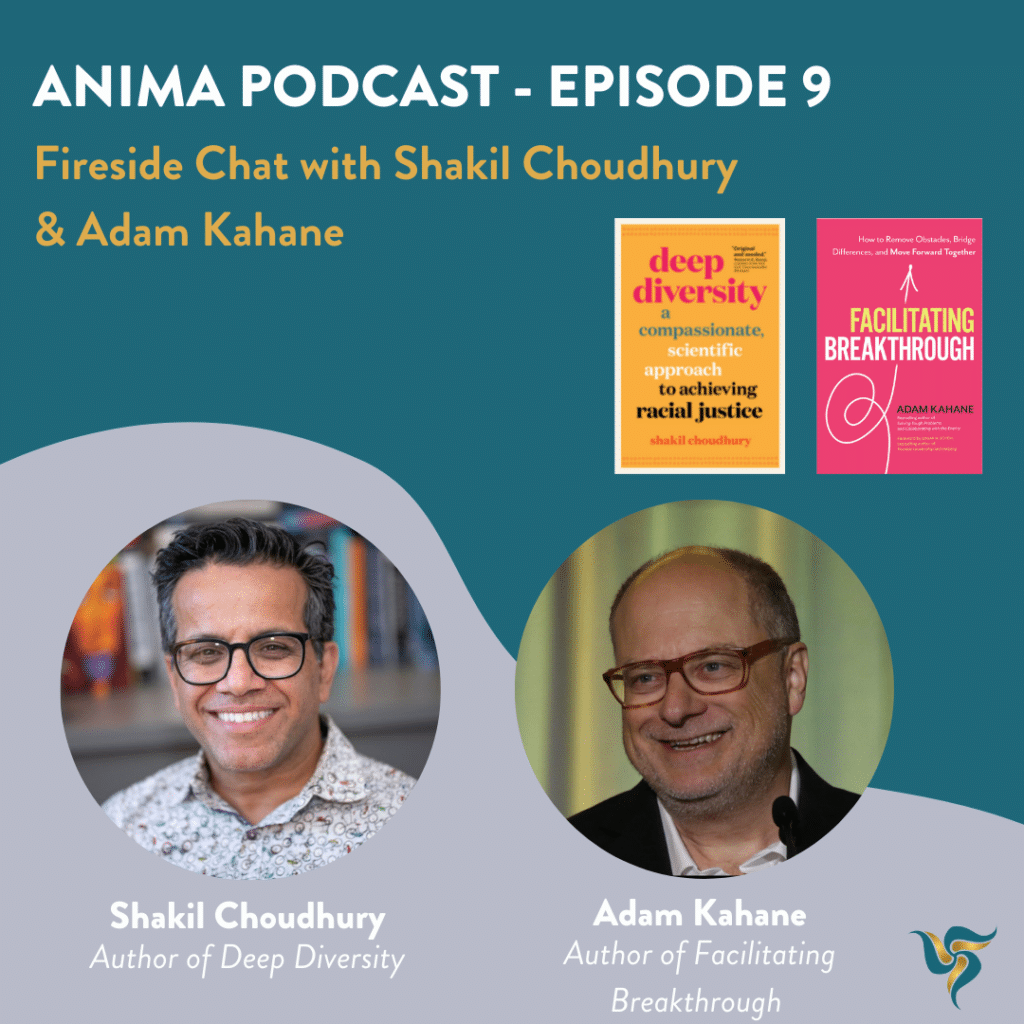
Episode 9 — Fireside Chat with Adam Kahane: Facilitating Extreme Group Conflict About Politics and Identity

October 10, 2023
Apple PodcastsAnchorBreakerGoogle PodcastsPocketCastsRadio PublicSpotifyRSS

Join Shakil Choudhury and Adam Kahane in an intimate fireside chat as these two amazing leaders, facilitators and authors discuss their new books and approaches to constructive dialogue both inside organizations and in broader society.

In a time of extreme political polarization, call-outs and cancel culture, how do leaders support constructive dialogue and de-escalate conflict in society and organizations? How do we make meaningful change leveraging our diverse identities while working with opposing beliefs and experiences? Join Shakil Choudhury and Adam Kahane in an intimate fireside chat as these two amazing leaders, facilitators and authors discuss their new books and approaches to constructive dialogue both inside organizations and in broader society.

Episode 8 — Deep Diversity Book Launch: Fireside Chat with Loretta Ross

February 26, 2023
Apple PodcastsAnchorBreakerGoogle PodcastsPocketCastsRadio PublicSpotifyRSS

How do advocates and allies of the anti-racist movement work towards a more just society? What does it mean to integrate, inner and outer, psychology with power? How do we place love and compassion at the centre of our actions and create call-in culture?

In this intimate session, racial justice leader and elder Loretta Ross (author of upcoming Calling In the Calling Out Culture) will join Shakil in exploring the evolution of the anti-racist movement from a culture of shame and blame, towards a more compassionate and inclusive approach, keeping racial justice work at the centre of the conversation. Join us in this powerful wisdom session to help us celebrate the launch of Deep Diversity.

Episode 7 — A Transformative Model for JEDI Leadership (Teaching Racial Justice Without Shame or Blame, Part 3)

February 26, 2023
Apple PodcastsAnchorBreakerGoogle PodcastsPocketCastsRadio PublicSpotifyRSS

In this Anima Café, our co-founder Shakil Choudhury will present a new tool to identify the stages of JEDI transformation that leaders and organizations are at: The Anima Transformative JEDI Model. Exploring 3 different stages on the JEDI journey, this instrument helps identify strengths, weaknesses, and pathways to change.

We’re witnessing unprecedented openness and vulnerability from leaders over the last year in addressing anti-Black racism and overall equity in their organizations. Despite this, the struggle persists to create long-lasting systems change. Leaders are still misfiring on who they hire, advance, and retain because of limitations in JEDI (Justice, Equity, Diversity, and Inclusion) knowledge and skills. Black, Indigenous, and people of colour are still disproportionately approached to “fix” diversity problems in organizations. Those who call attention to systemic instances of racism and discrimination get unfairly stereotyped as “troublemakers” or “difficult” colleagues. Burnout, increased levels of stress, retaliation, and constructive dismissal are the stories that equity advocates tell when they recount the toll of pushing for organizational transformation. And occasionally, in progressive organizations, JEDI goals can sometimes be hijacked by a small subset of activists who themselves may be deregulated or wounded.

Episode 7: A Transformative Model for JEDI Leadership (Teaching Racial Justice Without Shame or Blame, Part 3)

In this Anima Café, our co-founder Shakil Choudhury will present a new tool to identify the stages of JEDI transformation that leaders and organizations are at: The Anima Transformative JEDI Model. Exploring 3 different stages on the JEDI journey, this instrument helps identify strengths, weaknesses, and pathways to change. This is the last of three sessions on effective strategies to teach justice and equity issues without shame and blame.

Episode 6 — Developing Racial Pattern Recognition Skills to Undo Racism (Teaching Racial Justice Without Shame or Blame, Part 2)

February 26, 2023
Apple PodcastsAnchorBreakerGoogle PodcastsPocketCastsRadio PublicSpotifyRSS

This session will introduce the concept of “racial pattern recognition” as a frame to help learners detect systemic issues related to racism and oppression. Join us as we continue to discuss effective strategies to teach justice and equity issues without shame and blame.

Humans are born with basic pattern recognition skills which allow us to make meaning and navigate the world around us whether learning to speak, read and write, or identifying songs we like to navigating our phone controls by touch and feel. Pattern detection is essential to our very survival as a species. As social justice activists and educators, we have developed a keen awareness to repeated cycles of racial inequity, whether it is the school-to-prison pipeline in education, over-policing in criminal justice or undertreatment in health care. And we are bewildered and often enraged when others do not, or cannot, recognize these systemic patterns that appear so obvious.

But what is obvious to some can be learned by all.

Episode 6: Developing Racial Pattern Recognition Skills to Undo Racism

This session will introduce the concept of “racial pattern recognition” as a frame to help learners detect systemic issues related to racism and oppression. We will also explore why the “prejudice habit” is hard to break and why the principle of “slow-is-fast” from trauma therapy is critical to individual as well as policy change. Join us as we continue to discuss effective strategies to teach justice and equity issues without shame and blame.

Episode 5 — Teaching Racial Justice Without Shame or Blame (Part 1)

February 26, 2023
Apple PodcastsAnchorBreakerGoogle PodcastsPocketCastsRadio PublicSpotifyRSS

Using road-tested, trauma-informed strategies developed over 25 years, this cafe will argue that psychological literacy is a key part of what is missing and could strengthen racial and social justice work. Ideas from this session will draw on the newly revised edition of “Deep Diversity: A Compassionate, Scientific Approach to Achieving Racial Justice”, by Shakil Choudhury.

Are you a racial justice educator who: Is frustrated by the resistance and fragility you experience among people you hope to bring along on the equity journey? Has felt that traditional anti-racist/anti-oppression approaches offer useful strategies but also seem imbalanced, one-sided or ineffective? Has experienced, or want to avoid, emotional burnout, and want a way of doing the work that is more personally sustainable?

Episode 5: Teaching Racial Justice Without Shame or Blame

Then this session may be useful for you! Using road-tested, trauma-informed strategies developed over 25 years, this cafe will argue that psychological literacy—defined broadly as learning that supports deep self-reflection, self-regulation and compassion—is a key part of what is missing and could strengthen racial and social justice work. It is possible to engage learners in this emotionally charged work without (or by minimizing) feelings of shame and blame. Ideas from this session will draw on the newly revised edition of “Deep Diversity: A Compassionate, Scientific Approach to Achieving Racial Justice”, by Shakil Choudhury (to be released September 2021).

Episode 4 — The Roots of Rumi: Cultural Celebration vs. Appropriation

March 8, 2023
Apple PodcastsAnchorBreakerGoogle PodcastsPocketCastsRadio PublicSpotifyRSS

Join host Annahid Dashtgard and guests as with the advent of Nowrooz (Persian New Year) on March 21, we explore the fine line between celebrating diverse cultures vs. appropriating them. With guests Khashayar Mohammadi, Persian poet, author of upcoming poetry book Me, You, Then Snow, and Professor Emma Lind, leader of Decoding Race for White Leaders course.

Join host Annahid Dashtgard and guests as with the advent of Nowrooz (Persian New Year) on March 21, we explore the fine line between celebrating diverse cultures vs. appropriating them. Taking Rumi as an example, we look at the western love affair with Rumi, one divorced from his Islamic heritage and roots. What questions do we need to develop respectful relationships with other cultures? How can we acknowledge the culture we are part of ourselves?

Episode 4: The Roots of Rumi: Cultural Celebration vs. Appropriation

With guests Khashayar Mohammadi, Persian poet, author of upcoming poetry book Me, You, Then Snow, and Professor Emma Lind, leader of Decoding Race for White Leaders course.

Episode 3 — Black History Month: Between Pride and Protest

February 26, 2023
Apple PodcastsAnchorBreakerGoogle PodcastsPocketCastsRadio PublicSpotifyRSS

This cafe explores how Black History Month both helps and hinders forward movement for the Black community. Guests Akilah Hamilton, Parker Johnson and Jessica Oddy take stock of where we are, how we got here and how we move forward while building collective capacity and courage.

What are the common understandings of why we celebrate Black History Month and for whom do we celebrate it? Are the moments of pride for Black communities the same as the national narratives and how are the continued protests for civil rights framed by both?

This cafe explores how Black History Month both helps and hinders forward movement for the Black community. How much are we talking about current Black Lives vs. the narrowed framing of past leaders with universal appeal (such as Martin Luther King)? How much does the American narrative obscure the specifics of how Black identity is experienced across the border and beyond? How much of the inequity gap have we really closed?

Episode 3: Black History Month: Between Pride and Protest

In this episode guests, Akilah Hamilton, Parker Johnson and Jessica Oddy, take stock of where we are, how we got here and how we move forward while building collective capacity and courage.

Episode 2 — Post-Election Debrief: Leadership for this Age of Discord

February 26, 2023
Apple PodcastsAnchorBreakerGoogle PodcastsPocketCastsRadio PublicSpotifyRSS

In this episode Shakil Choudhury and guests, Judy Rebick and Parker Johnson, take stock of where we are, how we got here and how we move forward while building collective capacity and courage.

The US is in a political crisis due to unclear election results. What is clear is that US democracy is broken, with at least half the electorate voting for an authoritarian leader who is racist, corrupt and undermines democracy on a daily basis.

Episode 2: Post-Election Debrief: Leadership for this Age of Discord

Regardless of who actually becomes president, the implications are global in nature, especially for minoritized peoples. the next 50 years are being described as another historical “age of discord”.

Episode 1 — Why Leaders Should Use the “F” Word More Often: Rising Authoritarianism in a Trumpian Era

February 16, 2023
Apple PodcastsAnchorBreakerGoogle PodcastsPocketCastsRadio PublicSpotifyRSS

In this episode we call to action the need to build community and capacity in our personal, community and professional lives as a response to the current stormy political era we are in.

On the eve of the most important US election in generations, democracy in that—and other western contexts— is in crisis. we need to stop being hypnotized by Donald Trump’s theatrics and incivility to see the broader patterns of behaviour: that of a classic authoritarian leader.

Episode 1: Why Leaders Should Use the "F" Word More Often: Rising Authoritarianism in a Trumnpian Era

In response, leaders from civil society, workplaces and beyond need to get comfortable using the “f” word: fascism. Although still incomprehensible to most mainstream North Americans, using an evidence-based approach to demonstrate  the frame of authoritarianism and fascism better helps explain the current political moment of Trump and his allies.

Putting their words, actions and the related violence into context…with implications for racial minorities globally.